

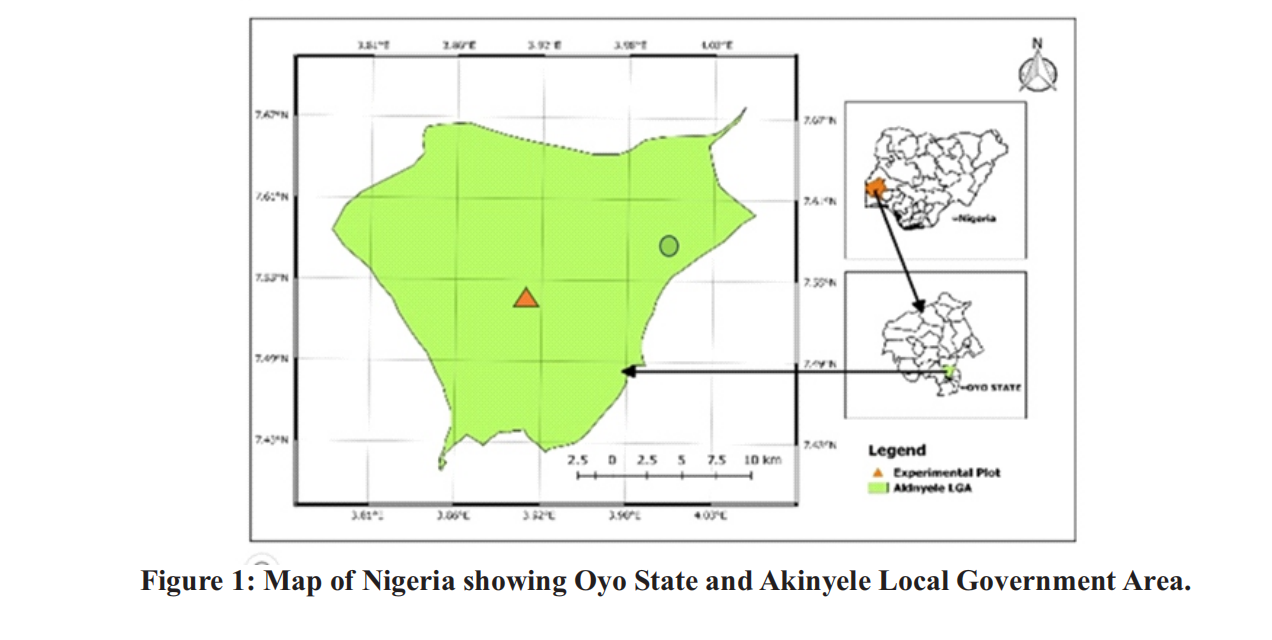
Occurrence of Endoparasites in Slaughtered Cattle at Amosun Commercial Abattoir, Akinyele Local Government Area, Oyo State, Nigeria.
Article Sidebar
Main Article Content
Abstract
Endoparasites, including blood and gastrointestinal helminths, continue to pose a significant challenge to cattle productivity and sustainability worldwide, particularly in Nigeria. This study investigated the prevalence, severity, and co-infection patterns of endoparasitic infections (haemoparasites Trypanosoma spp., Babesia spp., Anaplasma spp., and gastrointestinal helminths Strongyles and Trichuris spp.) in slaughtered cattle at the Amosun commercial abattoir in Akinyele, Ibadan, Nigeria, using conventional diagnostic techniques (wet mount preparation, stained thin and thick blood smears, buffy coat method, microscopy, flotation, and sedimentation). Of the 250 cattle, 87 (34.8 %) were infected with haemoparasites, and 113 (45.2 %) were infected with helminths. Among the blood parasites, Babesia spp. had the highest prevalence 52(20.8%), followed by Trypanosoma spp. 19(7.6%), and Anaplasma spp. 16(6.4%). The overall percentage of anaemic cattle infected with haemoparasites was 30(35.3%), and those infected with helminths was 9(8.0%). The overall co-infection rate was 41(16.4%), and 26 (63.4%) of these cattle were anaemic, and 9(6.3%) anaemic cattle were not infected with parasites. Notable anaemia (mean PCV = 21.5%) and poor body condition scores were associated with parasitic infections, particularly in co-infected cattle. Co-infections were observed across all breeds, with the highest rate in Red Bororo cattle. Helminth infections were dominated by Strongyles 104(41.6%), followed by Trichuris spp. 9(3.6%). Breed susceptibility varied, with White Fulani showing the highest haemoparasite prevalence and Red Bororo showing the highest co-infection rate. Older cattle (>7 years) were more susceptible to Trypanosoma spp. (no significant difference), whereas younger cattle (1–2 years) showed higher Babesia spp. The prevalence was significantly different between the two groups. Seasonal variation revealed increased haemoparasite infections during the late dry season, which were marked by severe anaemia and poor body condition. These findings highlight the endemic nature of parasitic infections in cattle and emphasise the need for integrated parasite control strategies to improve animal health and abattoir productivity.
Article Details

This work is licensed under a Creative Commons Attribution-NonCommercial-NoDerivatives 4.0 International License.
References
FAOSTAT (2021) Selected Livestock Population in Nigeria, Food and Agriculture Organization of the United Nations (FAO) Rome, Italy. Statistical Yearbook, vol. 1. Accessed 25: 04: 2025.
International Livestock Research (2023). Livestock Sector Analysis and Strategy for Nigeria www.ilri.org
. Accessed 25: 04: 2025.
Inter-reseaux (2023). Demand for farm animal products in Nigeria: An opportunity for Sahel Countries? www.inter-reseaux.org/
(in French). Accessed 25: 04: 2025
Gboeloh, L. B., & Araka, A. D. (2022). Prevalence of tick-borne haemoparasitic infections in Zebu cattle slaughtered in Yenagoa, Bayelsa State. International Journal of Biological and Pharmaceutical Sciences Archive, 3(1): 24-30. DOI:. Salinas-Estrella, E., Cobaxin-Cárdenas, M. E., Quiroz-Castañeda, R. E., & Aguilar-Díaz, H. (2023). Haemoparasites co infections in bovines in the tropics. In: Aguilar-Marcelino, L., Younus M., Khan, A., Saeed, N. M. & Abbas, R. Z. (eds), One Health Triad, Unique Scientific Publishers, Faisalabad, Pakistan, 3: 136-145. https://doi.org/10.47278/book.oht/2023.88
Tiba, A., Ouation, S. S., Nawolo, Y., Zahouli, F. Z. B., Jacques, D. M., & Yahaya, K. (2023). Prevalence of Major Haemoparasites in Cattle at Department of Kounahiri, Côte d’Ivoire. International Journal of Pathogen Research, 12(6): 1-10. DOI: 10.9734/ijpr/2023/v12i6247
Strydom, T., Lavan, R. P., Torres, S., Heaney, K. (2023). The Economic Impact of Parasitism from Nematodes, Trematodes and Ticks on Beef Cattle Production. Animals, 13(10): 1599. https://doi.org/10.3390/ani13101599
.
Obadiah, H. I. & Shekaro, A. (2012). Survey of tick infestation in cattle in Zaria Abattoir, Nigeria. Journal of Veterinary Advances, 2(2): 81-87. url={https://api.semanticscholar.org/CorpusID:36125096}
AbdelBagi, M. E., Sammak, B. M., Mohamed, A. E., AlKarawi, M. A., AlShahed, M. & AlThagafi, M. A. (2004). Gastrointestinal parasite infestation. European Radiology, 14(3): 116-31. doi: 10.1007/s00330-003-2041-2.
Haque, R. (2007). Human intestinal parasites. Journal of Health Population Nutrition, 25(4): 387-91.
Rafiullah, T., Sajid, A., Shah, S. R., Ahmad, S. & Shahid, M. (2011). Prevalence of gastrointestinal tract parasites in cattle of Khyber Pakhtunkhwa. Journal of Agricultural and Biological Science, 6: 9-15.
Nicholson, M. J. & Butterworth, M. H. (1986). A guide to body condition scoring of zebu cattle. International Livestock Center for Africa-ILCA, Addis Ababa, Ethiopia 4–16
Borden, M., Immanuel, S., Pricilla, M., Alaster, S., Oscar, M. & Erick K. (2019). Applicability of teeth examination as a tool for age estimation in a semi-arid cattle production environment in Namibia. Tropical Animal Health and Production. https://doi.org/10.1007/s11250-019-02172-x
Dupuy, C., Morignat, E., Maugey, X., Vinard, J. L., Hendrikx, P., Ducrot, C., Calavas, D., & Gay, E. (2013). Defining syndromes using cattle meat inspection data for syndromic surveillance purposes: a statistical approach with the 2005–2010 data from ten French slaughterhouses. Veterinary Research, 9: 88. https://doi.org/10.1186/1746-6148-9-88
Soji, Z., Mabusela, S. P., Muchenje, V. (2015). Associations between animal traits, carcass traits and carcass classification in a selected abattoir in the Eastern Cape Province, South Africa. South African Journal of Animal Science, 45: 278–288. https://doi.org/10.4314/sajas.v45i3.6
Soulsby, E. J. L. (1982). Helminths, Arthropods and Protozoa of Domesticated Animals, Bailliere Tindall, London, UK, 7th edition.
Gebrewahd, G. & Henock, A. (2015). The Comparison between Microhematocrit and Automated Methods for Hematocrit Determination. International Journal of Blood Research and Disorders, 2(1). DOI:10.23937/2469-5696/1410012
Chesbrough, M. (2002). District laboratory practice in tropical countries (part 1). Edinbough Building UK, pp 62-154.
Okorafor, U. P. & Nzeako, S. O. (2014). Prevalence of Haemoparasites of Cattle from Three Abattoirs in Ibadan Metropolis, Oyo State, Nigeria. International Journal of Scientific Research in Environmental Sciences, 2(7): 244-249. DOI:10.12983/ijsres-2014-p0244-0249
Dauda, G. O., Olabanji, S., Mohammed, R., Sandra, O., Sunday, A., Akande, F., Fasasi, K. & Monsuru, A. (2022). Haemoparasites and Polyparasitism of Intestinal Helminths among Cattle Slaughtered in Selected Abattoirs in Abeokuta, Ogun State. Pan African Journal of Life Sciences, 6(1): 402-413. DOI: 10.36108/pajols/2202/60.0150.
Ola-Fadunsin, S. D., Ademola, I. O., Adejinmi, J. O. & Okediran, B. S. (2021). Haemoparasites and the haematobiochemical profiles associated with Anaplasma marginale infections of cattle in Ilorin, Nigeria. Veterinaria, 70(3): 335-349. doi.org/10.51607/22331360.2021.70.3.335.
Atsuwe, T., Obisike, V., Azua, E. & Imandeh, G. (2019). Prevalence of tick borne haemoparasites in some breeds of cattle and goats slaughtered in some abattoirs within Makurdi, Nigeria. Journal of Applied Life Sciences International, 21: 1–5. 10.9734/jalsi/2019/v21i430110.
Weny, G., Okwee-Acai, J., Okech, S. G., Tumwine, G., Ndyanabo, S., Abigaba, S. & Goldberg, T. L. (2017). Prevalence and risk factors associated with haemoparasites in cattle and goats at the edge of Kibale National Park, Western Uganda. Journal of Parasitology, 103(1): 69-74. DOI: 10.1645/16-33
Adedipe, O. D., Uwalaka, E. C., Akinseye, V. O., Adediran, O. A. & Cadmus, S. I. B. (2014). Gastrointestinal Helminths in Slaughtered Cattle in Ibadan, South-Western Nigeria. Journal of Veterinary Medicine 2014: 1-6. https://doi.org/10.1155/2014/923561
Pam, V. A., Ogbu, K. I., Igeh, C. P., Bot, C. J. & Vincent, G. (2013). The Occurrence of Gastrointestinal and Haemoparasites of Cattle in Jos Plateau state, Nigeria. Journal of animal science Advances, 3(2): 97-102. DOI: 10.5455/jasa.20130226010552
Qadeer, M. A., Gumel, M. A., Chessed, G., Nganjiwa, J. I., Bernard, K., Vandi, P., Hakim, D. & Fadimatu, U. (2015). A Cross-Sectional Study on the Gastrointestinal and Haemoparasites of Trade cattle in Girei and Yola North Local Government Areas of Adamawa State, Nigeria. Journal of Agriculture and Veterinary Science, 8(4): 3-5.
Biyazen, H., Duguma, R. & Asaye, M. (2014). Trypanosomosis, Its Risk Factors, and Anaemia in Cattle Population of Dale Wabera District of Kellem Wollega Zone, Western Ethiopia. Journal of Veterinary Medicine (2014): 374-191. doi: 10.1155/2014/374191.
Mabbott, N. A. (2018). The influence of parasite infections on host immunity to co-infection with other pathogens. Front Immunology, (9):2579. doi: 10.3389/fimmu.2018.02579.
Kizza, D., Ocaido, M., Mugisha, A., Azuba, R., Nalule, S., Onyuth, H., Musinguzi, S. P., Okwasiimire, R. & Waiswa, C. (2021). Prevalence and risk factors for trypanosome infection in cattle from communities surrounding the Murchison Falls National Park, Uganda. Parasites Vectors, 14: 513. https://doi.org/10.1186/s13071-021-04987-w
Sures, B., Nachev, M., Selbach, C. & Marcogliese, D. J. (2017). Parasite responses to pollution: what we know and where we go in ‘Environmental Parasitology. Parasites & Vectors, 10(65). https://doi.org/10.1186/s13071-017-2001-3
Perry, B. D. (2002). Investing in Animal Health Research to Alleviate Poverty. www.ilri.org
. Accessed 25: 04: 2025.
Singh, S., Malhotra, P. & Singla, L. (2014). Fatal Natural Infection with Microfilariae of Setaria Species in a Cattle Bull. Progressive Research, 9(1): 355-356.
Goedknegt, M. A., Welsh, J. E., Drent, J. & Thieltges, D. W. (2015). Climate change and parasite transmission: how temperature affects parasite infectivity via predation on infective stages. Ecosphere, 6(9): 1-9. https://doi.org/10.1890/es15-00016.1