

Antiplasmodial activity of the extracts of <i>Mangifera indica</i> L. against clinical isolates of <i>Plasmodium falciparum</i>
Article Sidebar
Main Article Content
Abstract
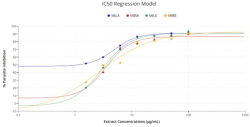
Despite ongoing efforts to control malaria, the emergence of drug-resistant Plasmodium falciparum strains has increased the need for alternative therapeutic approaches. In many endemic countries, medicinal plants have long been used in traditional healthcare systems, often in areas where malaria is prevalent. The continued use of these plants underscores their potential as novel antimalarial compounds. This study investigated the phytochemical composition and assessed the antimalarial efficacy of both aqueous and ethanolic crude extracts of Mangifera indica leaves and stem bark against 10 clinical isolates of P. falciparum that met the WHO-recommended parasite density range of 2,000–80,000 parasites/μL and were selected for the in vitro study. Using a concentration range of 1.56 to 100 μg/mL, the assays were performed in duplicate, and significant (P = 0.001) inhibition of schizont maturation was observed in both extracts relative to the control. The ethanolic extracts exhibited particularly strong antiplasmodial activity, with M. indica leaf ethanol (MiLE) showing 93.2% inhibition with an IC50 of 2.93μg/mL, and M. indica bark ethanol (MiBE) demonstrating 90.4% inhibition with an IC50 of 2.63μg/mL. M. indica leaf aqueous (MiLA) extract showed 91.8% parasite growth inhibition with an IC50 of 4.90μg/mL, while M. indica bark aqueous (MiBA) extract showed 89.4% parasite growth inhibition with an IC50 of 3.51μg/mL. These results provide convincing evidence of the antiplasmodial potential of M. indica leaves and stem bark, validating the plant's traditional use in malaria treatment. The ethanolic extracts exhibited significant inhibitory effects against P. falciparum, suggesting that the active compounds may have considerable therapeutic potential. Further research is needed to isolate, identify, and characterise the bioactive compounds responsible for these activities. This study contributes to the growing evidence supporting the exploration of ethno-botanicals as alternative sources of antimalarial agents, particularly in the face of increasing resistance to conventional treatments.
Article Details

This work is licensed under a Creative Commons Attribution-NonCommercial-NoDerivatives 4.0 International License.
References
1. Kager, P. A. (2002). Malaria control: Constraints and opportunities. Tropical Medicine and International Health, 7(12), 1042–1046. https:// oi.org/10.1046/j.1365-3156.2002.00981.x
2. Molta, N. B., Watila, I. M., Gadzama, N. M., Muhammad, K. K., Ameh, J. O., & Daniel, H. I. (1992). Chloroquine therapy of Plasmodium falciparum infection in Damboa, Borno, Nigeria. Annals of Borno, 8/9, 220–225. https://www.africabib.org/rec.php? ID=134609387
3. Ouattara, Y., Sanon, S., Traore, Y., Mahiou, V., Azas, N., & Sawadogo, L. (2006). Antimalarial activity of Swartzia madagascariensis Desv. (Leguminosae), Combretum glutinosum Guill and Perr. (Combretaceae) and Tinospora bakis Miers (Menispermaceae), Burkina Faso medicinal plants. African Journal of Traditional, Complementary and Alternative Medicines, 3(1), 75–81. https://journals.athmsi.org/index.php/ajtcam/article/view/8
4. World Health Organisation (2024). Global malaria programme operational strategy 2024–2030. https://www.who.int/publications/i/item/9789240090149
5. Caraballo, H., & King, K. (2014). Emergency department management of mosquito-borne illness: malaria, dengue, and West Nile virus. Emergency Medicine Practice, 16(5), 1–24. PMID: 25026257 https://www.ovid.com/01073741- 201405000-00001
6. Roll Back Malaria (2010). Economic costs of malaria. World Health Organisation https://share.google/MGDUQOociI4Yk0HEK
7. Gessler, M., Nkunya, M., Mwasumbi, L., Heinrich, M., & Tanner, M. (1994). Screening Tanzanian medicinal plants for antimalarial activity. Acta Tropica, 56(1), 65–77. https://doi.org/10.1016/0001-706X(94)90041-8
8. Jenett-Siems, K., Mockenhaupt, F. P., Bienzle, U., Gupta, M. P., & Eich, E. (1999). In vitro antiplasmodial activity of Central American medicinal plants. Tropical Medicine and International Health, 4(9), 611–615. https://doi.org/10.1046/j.1365-3156.1999.00456.x
9. Sutharson, L., Lila, K. N.,Prasanna, K. K., Shila, E. B., & Rajan, V. J. (2007). Anti-inflammatory and anti- nociceptive activities of the methanolic extract of the leaves of Fraxinus floribunda Wallic. African Journal of Traditional, Complementary and Alternative Medicines, 4(4), 411–416. https://doi.org/10.4314/ jtcam.v4i4.31235
10. Harborne, J. B. (1973). Phytochemical methods: A guide to modern techniques of plant analysis. Chapman and Hall. https:// ooks.google.com.ng/books?id=vCWHUU6iobwC
12. Flyg, B. W., Perlmann, H., Perlmann, P., Esposito, F., & Berzins, K. (1997). Wild isolates of Plasmodium falciparum malaria show decreased sensitivity to in vitro inhibition of parasite growth mediated by autologous host antibodies. Clinical and Experimental Immunology, 107(2), 321–327. https://doi.org/10.1111/j.1365-2249.1997.273-ce1163.x
13. Cranmer, S. L., Magowan, C., Liang, J., Coppel, R. L., & Cooke, B. M. (1997). An alternative to serum for the cultivation of Plasmodium falciparumin vitro. Transactions of the Royal Society of Tropical Medicine and Hygiene, 91(3), 363–365. https://doi.org/10.1016/S0035-9203(97)90110-3
14. Clarkson, C., Maharaj, V. J., Crouch, N. R., Grace, O. M., Pillay, P., Matsabisa, M. G., Bhagwandin, N., Smith, P. J., & Folb, P. I. (2004). In vitro antiplasmodial activity of medicinal plants native to or naturalised in South Africa. Journal of Ethnopharmacology, 92(2–3), 177–191. https:// oi.org/10.1016/j.jep.2004.02.011
15. Trager, W., & Jensen, J. B. (1976). Human malaria parasites in continuous culture. Science, 193(4254), 673–675. https://doi.org/10.1126/science.781840
16. Ngemenya, M. N., Akam, T. M., Yong, J. N., Tane, P., Fanso-Free, S. N. Y., Berzins, K., & Titanji, V. P. K. (2006). Antiplasmodial activities of some products from Turreanthus africanus (Meliaceae). African Journal of Health Sciences, 13, 33–39.https:// oi.org/10.4314/ajhs.v13i1.30815
17. Mustofa, J., Sholikhah, E. N., & Wahyuono, S. (2007). In vitro and in vivo antiplasmodial activity and cytotoxicity of extracts of Phyllanthus niruri L. herbs traditionally used to treat malaria in Indonesia. Southeast Asian Journal of TropicalMedicine and Public Health, 38(4), 609–615. (PMID: 17883098)
18. Abdulai, S. I., Ishola, A. A., & Bewaji, C. O. (2023). Antimalarial activities of a therapeutic combination of Azadirachta indica, Mangifera indica and Morinda lucida leaves: A molecular view of its activity on Plasmodium falciparum proteins. Acta Parasitologica, 68(3), 659–675. https://link.springer.com/article/10.1007/s11686-023-00698-7
19. Adebayo, J. O., Santana, A. G., & Krettli, A. U. (2012). Evaluation of the antiplasmodial and cytotoxicity potentials of husk fibre extracts from Cocos nucifera, a medicinal plant used in Nigeria to treat human malaria. Human and Experimental Toxicology, 31(3), 244–249. https://doi.org/ 0.1177/0960327111424298
20. Tona, L., Cimanga, R., Mesia, K., Musuamba, C., Bruyne, T., Apers, S., Hernans, N., Van Miert, S., Pieters, L., Totté, J., & Vlietinck, A. (2004). In vitro antiplasmodial activity of extracts and fractions from seven medicinal plants used in the Democratic Republic of Congo. Journal of Ethnopharmacology, 93(1), 27–32. https://doi.org/10.1016/j.jep.2004.02.022
21. Awe, S. O., Olajide, O. A., Oladiran, O. O., & Makinde, J. M. (1998). Antiplasmodial and antipyretic screening of Mangifera indica extract. Phytotherapy Research, 12(6), 437–438. https://doi.org/0.1002/(SICI)1099- 1573(199809)12:6<437::AID-PTR313>3.0.CO;2-C
22. Diso, S., Alli, M., Mukhtar, S., & Garba, M. (2017). Antibacterial activity and phytochemical screening of (Mangifera indica) mango stem and leaf extracts on clinical isolates of methicillin-resistant Staphylococcus aureus. Journal ofAdvanced Medical and Pharmaceutical Sciences, 13(1), 1–6. https://hal.science/hal-05385499
23. Alaiya, M. A., & Odeniyi, M. A. (2023). Utilisation of Mangifera indica plant extracts and parts in antimicrobial formulations and as a pharmaceutical excipient: A review. Future Journal of Pharmaceutical Sciences, 9, Article 37.https://doi.org/10.1186/s43094-023-00479-z
24. Asanga, E. E., Okoroiwu, H., Edet, U. O., Amaechi, D., Nelson, P. E., Uchenwa, M., Eseyin, O. A., Samuel, G., Ettah, L. A., & Obongha, O. A. (2023). Antimalarial activity of Mangifera indica aqueousextract in Plasmodium berghei's apicoplast. Tropical Journal of Pharmaceutical Research, 22(5), 1007–1015. https://doi.org/10.4314/ jpr.v22i5.11
25. Tsabang, N., Fokou, P. V. T., Tchokouaha, L. R. Y., Noguem, B., Bakarnga-Via, I., Nguepi, M. S. D.,Nkongmeneck, B. A., & Boyom, F. F. (2012). Ethnopharmacological survey of Annonaceae medicinal plants used to treat malaria in four areas of Cameroon. Journal of Ethnopharmacology,139(1), 171–180. https://doi.org/10.1016/j.jep.2011.10.035